RSS Feed   
  • Latest News:

    Another world is possible
  • Category: News and Announcements

    Occupy 4 Prisoners, Rally for Tarek Mehanna

    Occupy 4 Prisoners National Day of Action
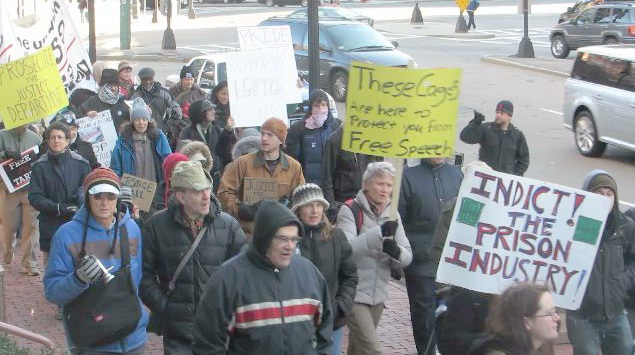
    On Monday, February 20, members of Occupy Boston, Ocupemos El Barrio, the Jericho movement, Committe of Friends and Relatives of Prisoners, and others led a protest against the Prison Industrial Complex in front of the Nashua Street Jail. A speak-out across the street from the jail included voices from the Black, Puerto Rican, Muslim, Palestinian, Trans communities and many of the prisoners inside displayed signs saying “HELP” “Free Us” and “99%”. It was a moving experience as the 150 or so protestors raised their fists in solidarity with prisoners, communicating non-verbally with them throughout the protest.
    A video and picture slideshow from the event is available here.
    Livestream Video from the event is available  here  and also here.
    More info on the Feb 20 National Day of Action is available at Occupy 4 Prisoners.
    ==========

    Rally for Tarek Mehanna: Sat Feb 25

    2-4pm Boston Common

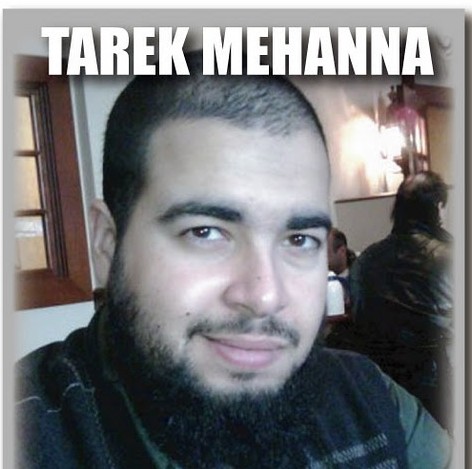
    On Saturday, February 25,  from 2-4pm, members of Occupy Boston will join a rally by the Gazebo on the Boston common for Tarek Mehanna and against the Islamophobia and government-sponsored political persecution that his case demonstrates.

    Imagine being in solitary confinement for 856 days and counting.

    Why was Tarek Mehanna targeted by the government? Tarek has been outspoken against US foreign policy, specifically in regards to Muslim countries. He has voiced his beliefs that Muslims should protect their religion and their brethren from being attacked. He has worked to raise consciousness about Muslim prisoners like Aafia Siddiqui and to build support for them. He has encouraged others to fulfill their obligations as Muslims to struggle against oppression. In doing so he is seen as an obstacle in the government’s effort to fight Islam by redefining it into a meek, submissive shadow of itself.

    By refusing to submit to the FBI’s coercive demands that he become an informant, and by speaking out against US policies, Tarek set an example that the government could not tolerate. The government and top 1%-owned media is persecuting him and countless others under bogus “terrorism” charges and insinuations as part of a broader policy of intimidating and silencing the Muslim community. According to Abdul Malik Mujahid of the Muslim Peace Coalition, Since September 11 2001, and the launching of long-term US wars and military occupations in Afghanistan and Iraq, more than 700,000 Muslims have been interviewed by the FBI, and some 75 percent of young Muslims report that they’ve been personally discriminated against or their friends are being harassed and profiled.

    It’s time to show the general public that we will not accept political repression, racist scapegoating, and relentless persecution of the Arab and Muslim sections of the 99%!

    Please come to learn more, show solidarity, and take a stand against injustice on Saturday Feb 25!

    For more information, please visit https://www.facebook.com/events/141188742666716/
    and
    http://www.freetarek.com/
    ===

    The Harvard Library Occupation

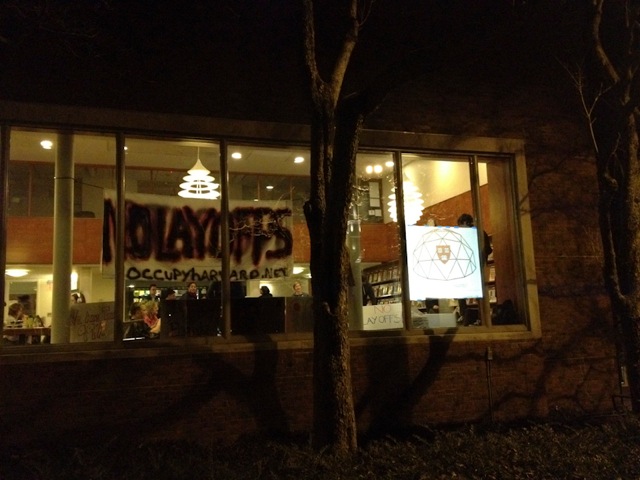
    The New Harvard Library Working Group led an autonomous action on Sunday Feb. 12, occupying Lamont Library during the last hour of the Students Occupy Summit. The New Library Occupation then connected with the Student Summit via livestream, to the enthusiastic support of the Summit participants, who marched to the library and chanted outside its windows.

    For the next few days, the Occupation held Think Tanks that attracted students, library employees, and university officials. Think Tank discussions ranged from “What is a library?” and “Power and the University” to “Strategies for the Occupy [Harvard] Movement.” All were recorded and are available on Occupy Harvard’s website. Numerous actions were brainstormed in those discussions, including an initiative to document and archive library workers’ experience in the library. One of the think tanks was attended by a member of the Harvard Library Innovation Laboratory (an independent project of the Law Library) — he suggested a collaboration between students, library employees and the Innovation Lab to envision a restructuring of the library system that draws on the experience of employees and library users, instead of on (three!) outside consulting agencies.

    A Think Tank of students and workers at the Library

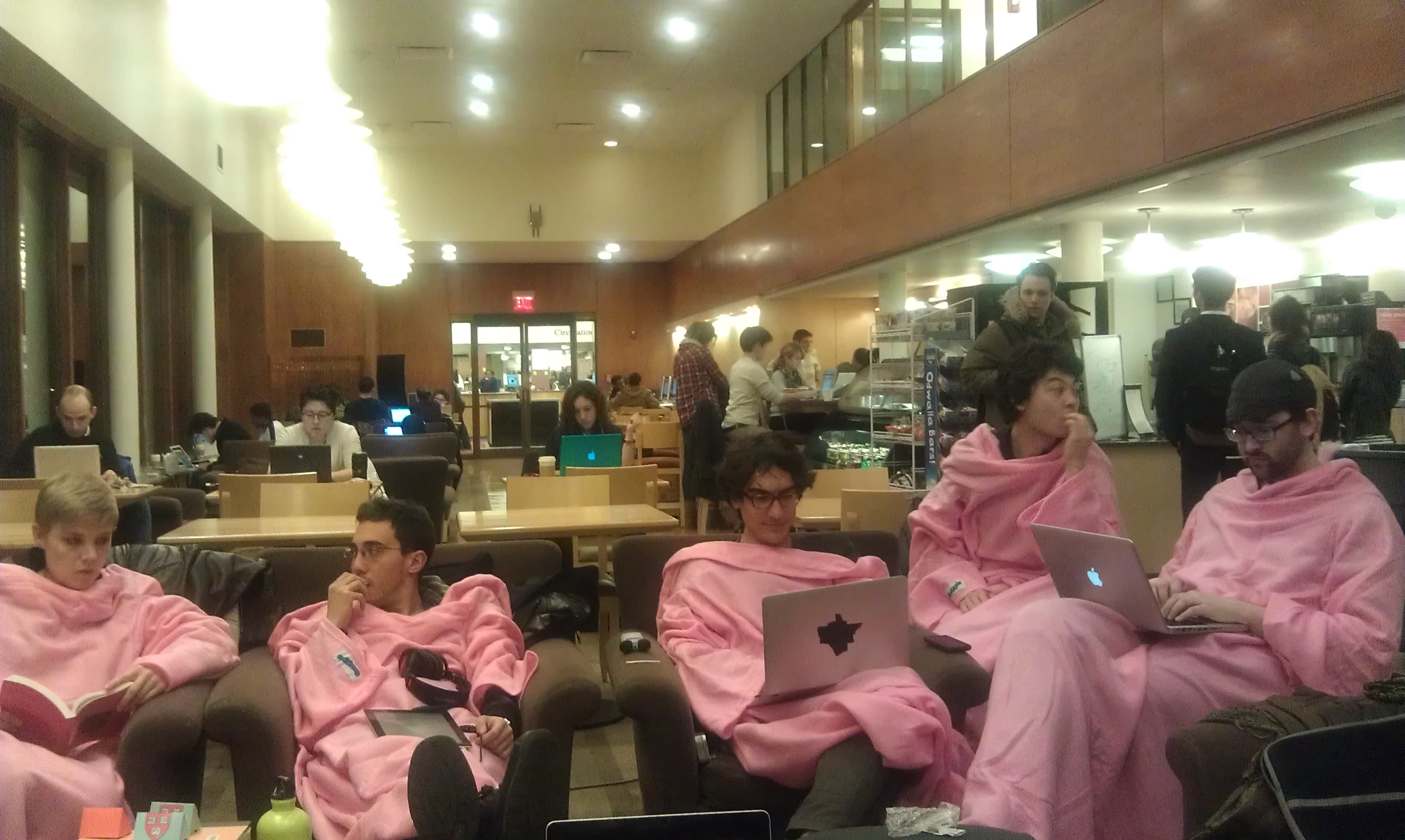
    The Occupation’s program also included skill shares and knowledge shares, a teach-in on challenging institutional hegemony, and a nonviolence training workshop. At night, Occupiers watched silent films, welcoming late-night library patrons to stop by and share food and films. The occasional Absurd Theater Workshop with university police was also a special treat. The Occupation was watched by as many as four city policemen and university guards at any given time,prompting some nonviolent resistance against spontaneous rules on sleeping “equipment.”
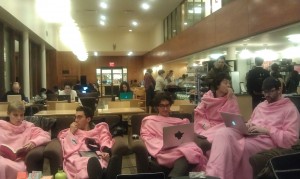
    The Occupy Harvard Pink Bloc

    While they occupied, students at times struggled to keep up with their demanding workload. Similarly, supportive university employees were concerned that they might jeopardize their position by visibly participating in the Occupy. Although the police presence was oppressive, many at the libraries recalled successful protests in Harvard’s history. In 1929, Corliss Lamont (who endowed the occupied library in his name) interfered on behalf of 19 scrubwomen who were fired by the Harvard Administration for demanding to be paid the Massachusetts Minimum Wage. On March 6, 1971 the International Women’s Day marchers occupied a building on the Harvard campus to turn it into the Harvard Women’s Center. Others also recall the Living Wage Campaign in Harvard’s recent history, as well as the numerous successful actions of the Student Labor Action Movement of Harvard.
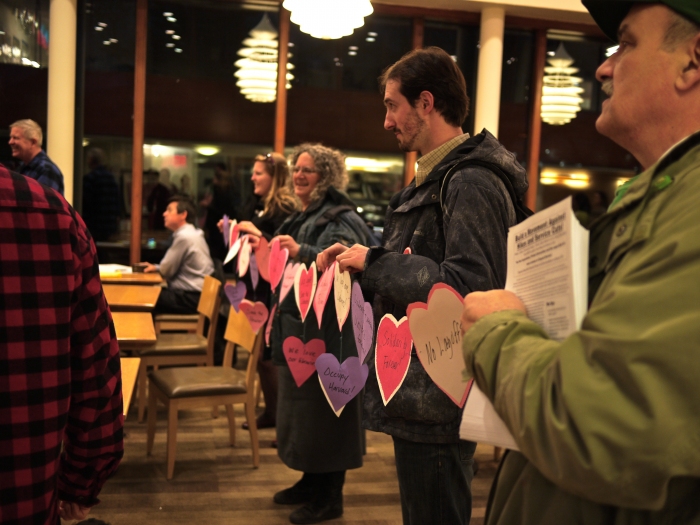
    This Valentine’s Day, to thank the Occupiers for their support, members of the Clerical Workers’ Union and non-unionzed employees presented them with a Valentine’s Day card.
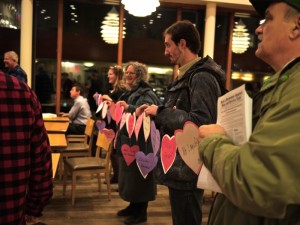
    Library employees present Occupy Harvard protesters a Valentine's Day card

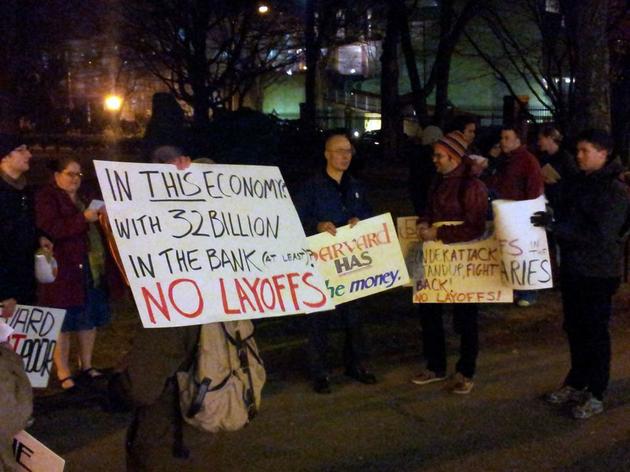
    On Thursday, workers, students, and alumni rallied to protest the university’s top-down, secretive approach to the restructuring of the library. Cambridge City Councillor Leland Cheung spoke at the rally, letting the protesters know that the City of Cambridge stood with them. Protesters decried Harvard’s plan to indiscriminately buy out long-time, older workers, calling against layoffs in Harvard’s libraries.
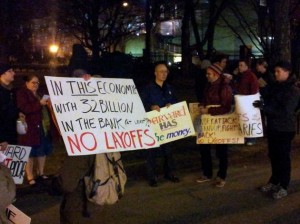
    Rally against indiscriminate layoffs and lack of transparency at Harvard

    This targeted occupation ends tonight, Friday, at 10pm. Before it leaves the library, Occupy Harvard is holding a phone-in to contact university donors and inform them about how their funds are being used by the Administration. The Occupy is also offering two Think Tanks, a nonviolence training, and a Library Assembly. Future actions are in the planning stages. To learn about what comes next, follow Occupy Harvard on their social media channels and see www.occupyharvard.net.

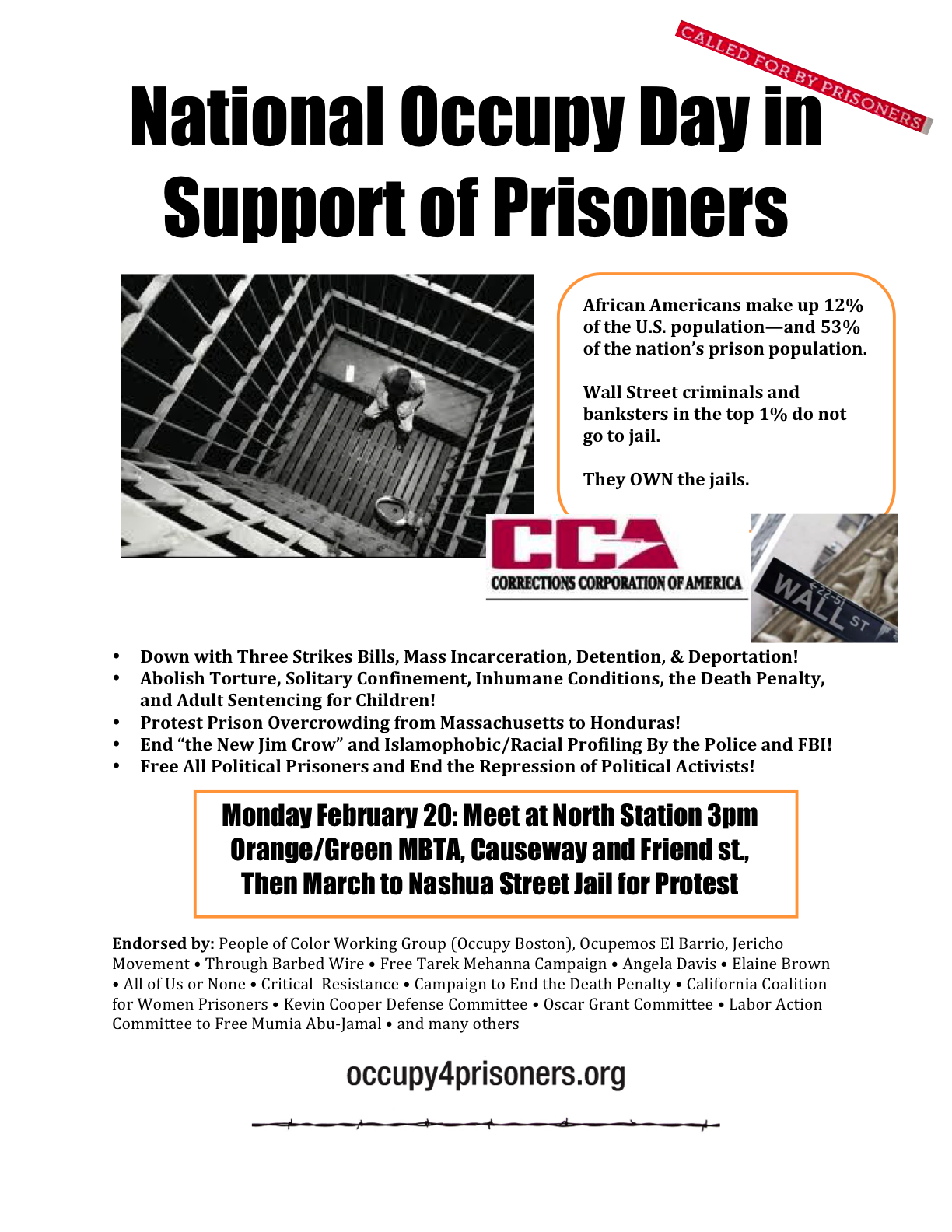
    Monday Feb 20: National Occupy Day for Prisoners

    On Monday, February 20, 2012 at 3:00 PM, the Occupy Boston People of Color Working Group, Ocupemos El Barrio, Jericho Movement, and many other individuals and organizations will be taking part in the National Occupy Day for Prisoners. We will meet at 3pm at the North Station MBTA Stop at Causeway St. and Friend St. and then march to the Nashua Street Jail on 200 Nashua Street in Boston. Answering the call from Occupy Oakland, we will stand in solidarity with the people confined within prison walls and to demand the end of the incarceration as a means of containing those dispossessed by unjust social policies.

    *Action agreements for Occupy 4 Prisoners Boston prisoner solidarity march, February 20th:

    * This protest will be a peaceful action. We are creating a space for our entire community, including formerly incarcerated people and their families, to feel free to speak out and build together to take on the prison system.

    *We will not engage in property destruction, civil disobedience, or arrest-able direct action. Many groups participating in this march, including some of the march organizers, the OB People of Color Working Group, Jericho Movement, Ocupemos El Barrio, and other organizations have members who are former prisoners or whose immigration status makes them vulnerable. Please show solidarity with the march and these groups by respecting this request.

    *We are here to march and protest the prison industrial complex. During the march, we will refrain from provoking the police so as not to raise the risk of arrest for those who participate. Any disagreement regarding the direction of the day will be resolved within our community, and not with law enforcement.

    *This march will be safe for people of all backgrounds, creeds, sexualities, genders, races, ethnicities and immigration status.

    *By following these agreements, you are respecting the wishes of those who planned this event and the community taking part in it. Please respect the tactics we have chosen for the march.

    Reasons for this protest:
    Continue reading “Monday Feb 20: National Occupy Day for Prisoners” »

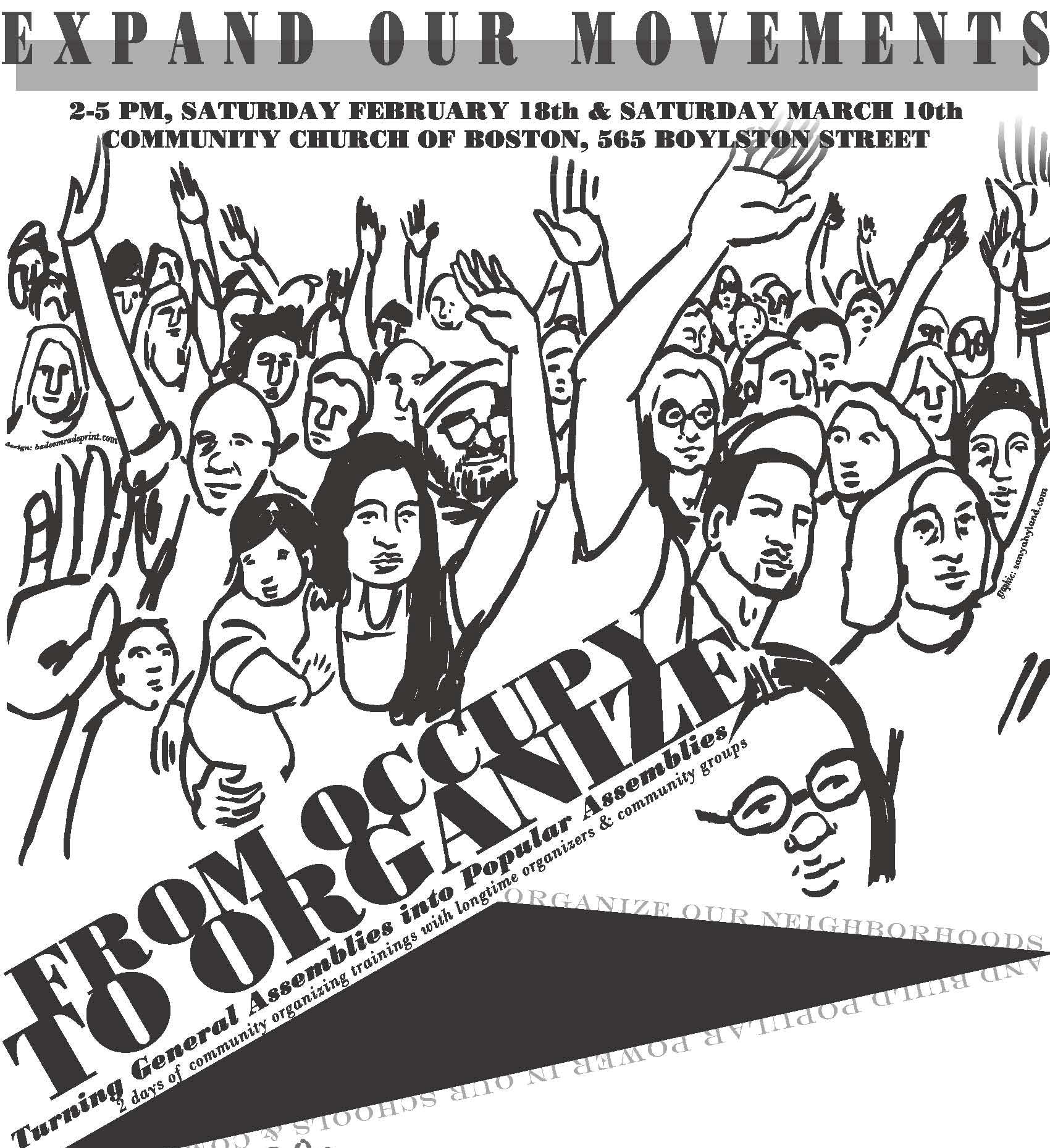
    This Saturday: From Occupy to Organize: Workshops to Expand Our Movement!

    From Occupy To Organize:
    A series of workshops, presented by long-time community organizers from a wide background, to give activists the skills we need to build a truly popular movement!

    Part I: Saturday, February 18* 2pm-5pm
    Community Church of Boston
    565 Boylston St #2
    Boston, MA
    Copley Green Line T stop

    *Part II is March 10 at 2pm.

    You must preregister for this workshop at  http://www.popularassembly.org/.

    • Join the conversation about expanding participation in our movements.
    • Discuss ways we can work together to engage more people through tried and true organizing tactics such as story sharing, listening campaigns, door-to-door outreach, one-on-ones and house meetings.
    • Find out about ways Occupy activists have moved beyond Facebook activism to face-to-face relationship building based on solidarity through common struggles.
    • Learn about effective collaborations between the Occupy Movement and organizing projects and the development of organizing practices that support grassroots leadership of those most affected by economic, racial and social injustice.
    • Share success stories about your grassroots organizing that have reached beyond activist circles.

    Prior trainings have provided Occupy Boston activists with a participatory strategy and a campaign development process that built organizing capacity and turned activists into local organizers. For many of the Occupy activists, it was their first time organizing more broadly instead of focusing on event or action mobilizations.   Whether you’re a seasoned organizer or an Occupier looking to learn new organizing tactics, please join us on Saturday!

    And don’t forget to register at http://www.popularassembly.org/.

    Occupy Boston Student Summit a Success

    Photo Essay By Forest and Chase
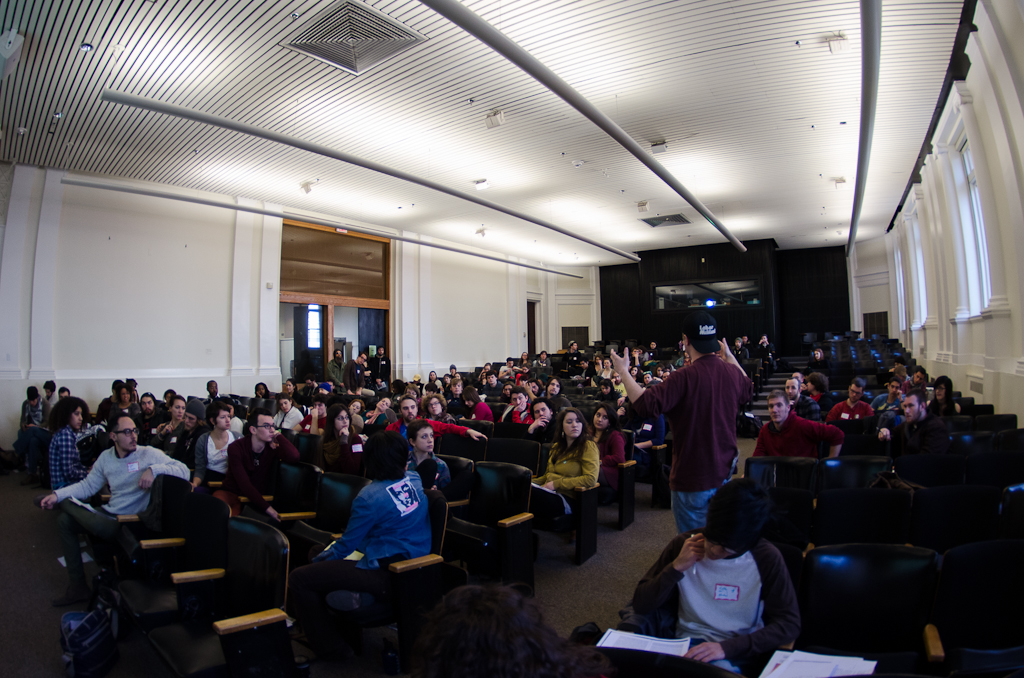
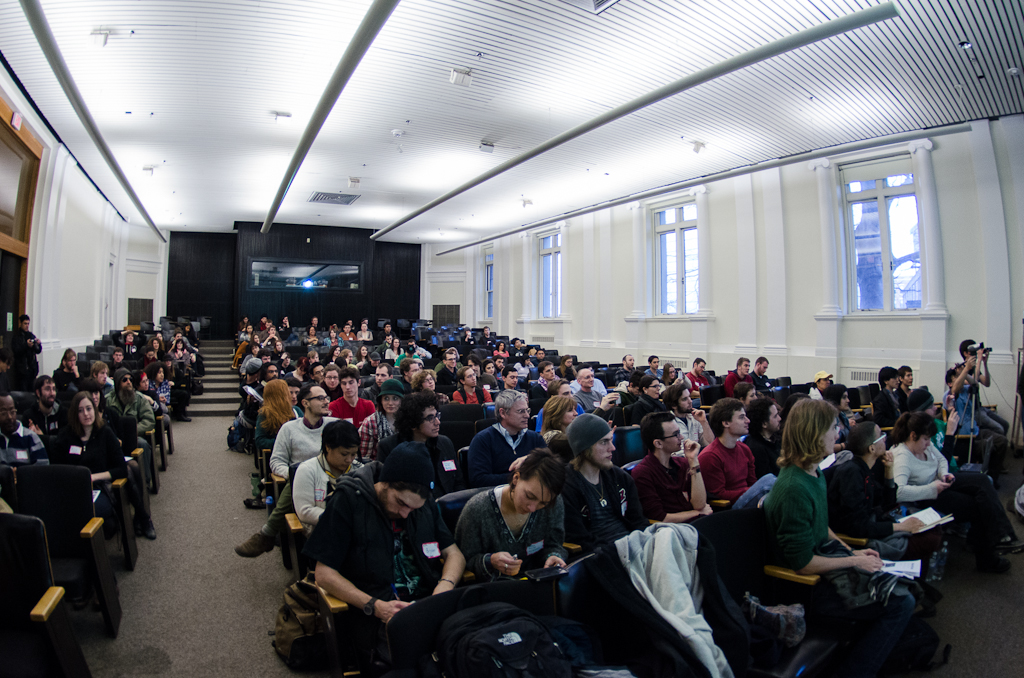
    The Occupy Boston Student Summit this past Sunday (the 12th) was the first time the many Occupy student groups in Boston convened in one, large space outside the context of a general assembly.
    Held in a philosophy building near Harvard Yard, the summit saw more than a hundred attendees from over a dozen schools both in the area, and as far away as Vermont.

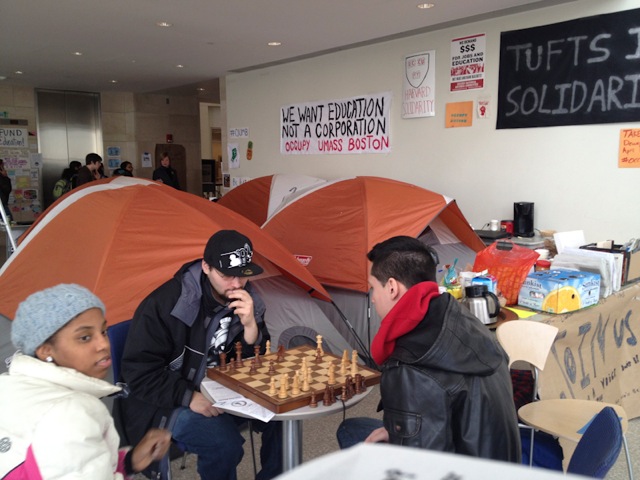
    This actually isn’t at the summit. This is UMass Boston, where students have set up a small tent city inside their student center to fight the increasing privatization of the supposedly public university. This is the back of the camp; the front area with a table and literature is in the background of the photograph. This photograph was taken the day that Occupy UMass Boston mic checked the board of trustees that was meeting a floor above the camp.
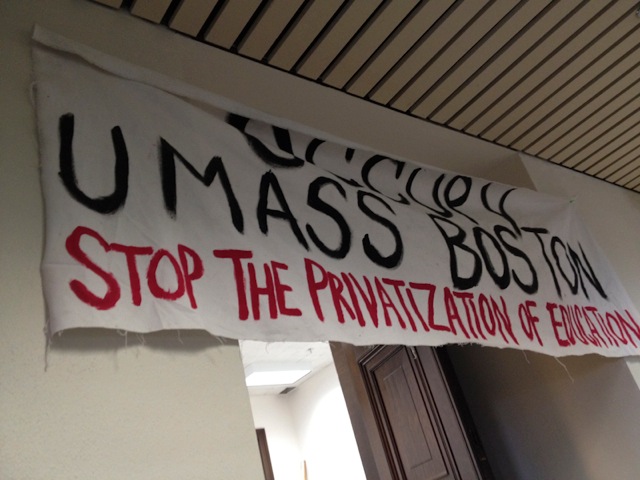
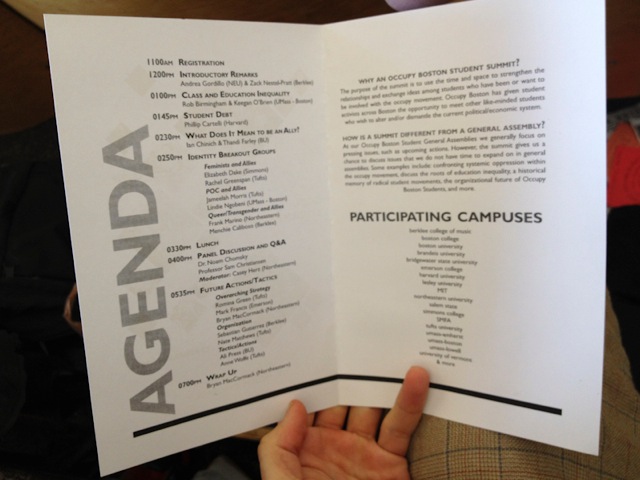
    Banner from UMass Boston hanging over one of the conference rooms at the summit, which was located at Harvard. Other schools represented in the attendees included Tufts, MIT, SMFA, Lesley, Northeastern, Berklee, Boston College, Emerson College, Bridgewater State University, Bennington College, Massachusetts College of Liberal Arts, and many others.
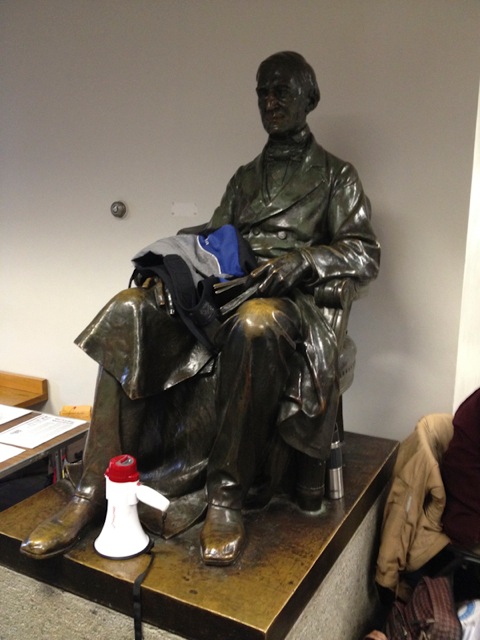
    I was really hoping Emerson would come to life and pick up that megaphone.
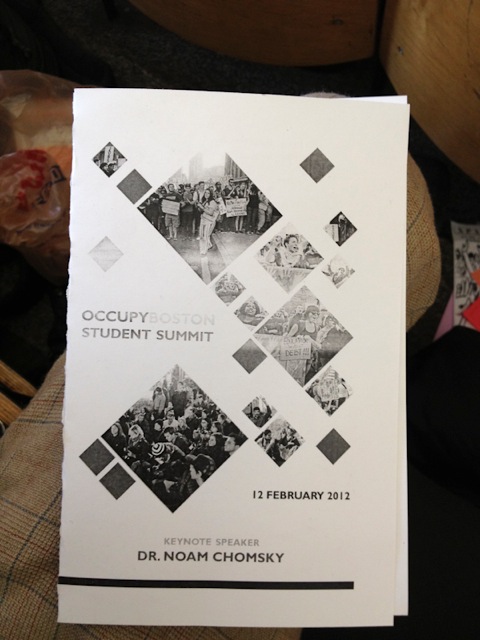
    Lovely program.
    The eight hour conference passed rather quickly. The day began with a group speak-outs on class and education inequality, and another on student debt. Soon following those were identity breakout groups in which separate spaces were given to discuss and contemplate particular conditions of oppression facing women, people of color, and queer/trans people with insight to how these might be understood within the student community of Occupy Boston. The day ended with a Q&A panel, followed by planning for future actions/tactics.

    Photo By Chase C.

    Photo by Chase C.

    Photo By Chase C.

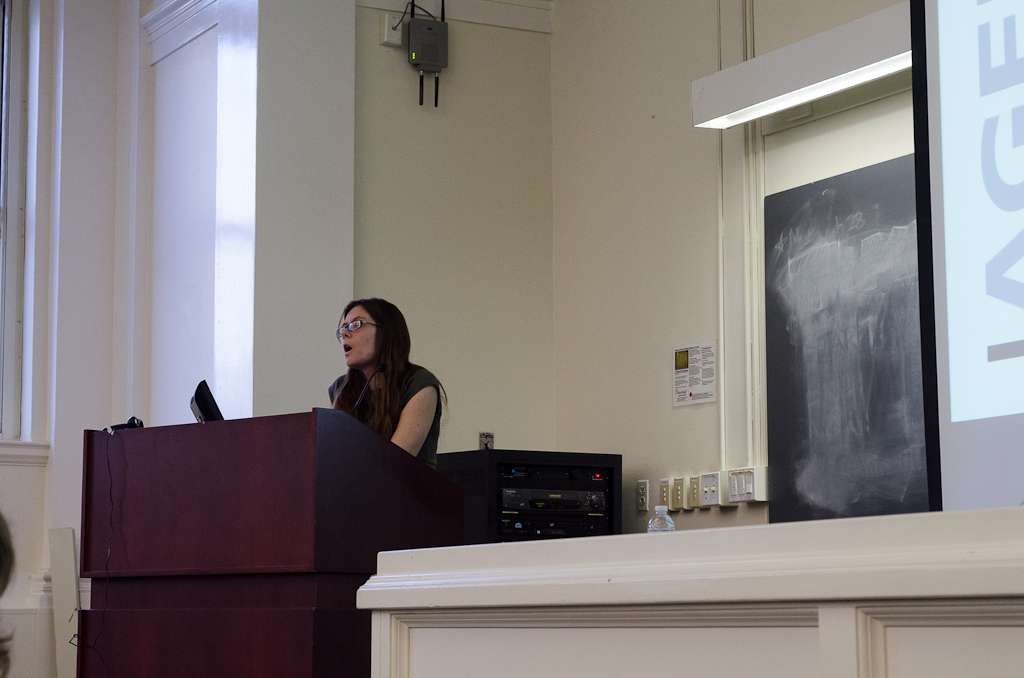
    Professor Sam Christiansen from Northeastern gave a riveting talk addressing the history of student movements, and the continued revolutionary potential of student activism in society today. Christiansen said that students as seekers of truth are in the right place to directly act on society. She encouraged students to start cross-campus reading groups and to think of activism as a central aspect of education. She reminded us of events in the 1960s such as when students and workers united to shut down Paris, the release of the Port Huron Statement, and worldwide changes arising from the universities—finally concluding that these cannot be so much models to follow as things to remember and be informed by.
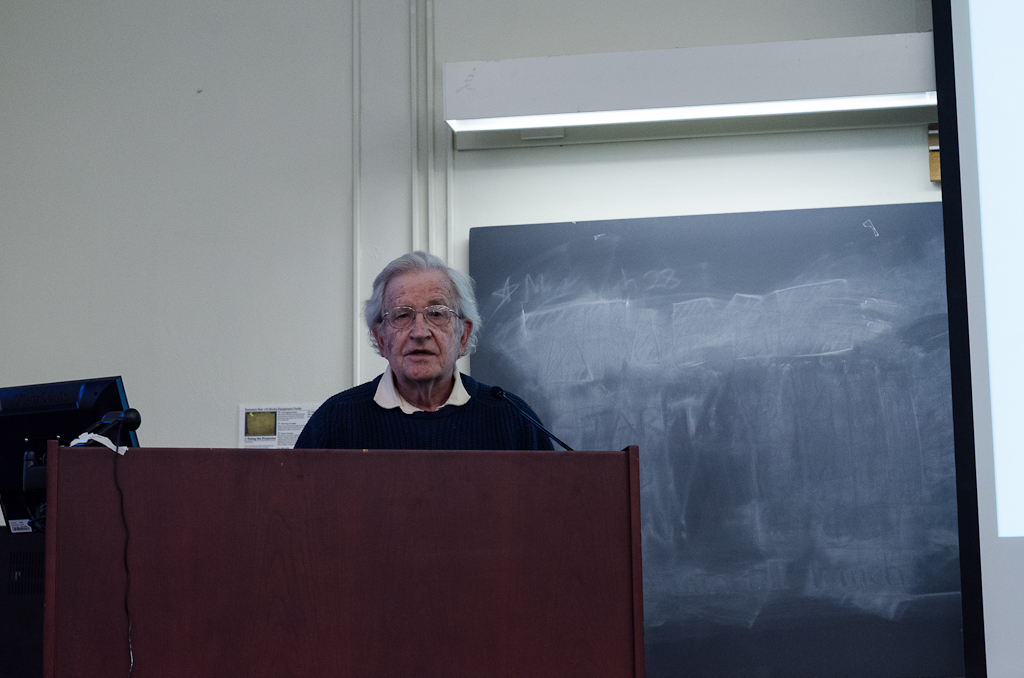
    Noam Chomsky spoke afterwards. Chomsky’s presence at the summit (it’s rumored) was not widely publicized so the event wouldn’t get flooded with non-summit participants. This meant it was really just him having a conversation with us, which was very nice. His talk addressed some of the causes for present restructuring of universities in the image of the corporation. Chomsky spoke about the present—and past—relationships between education and business in America, pointing to Lewis Powell’s 1971 memorandum to the U.S. Chamber of Commerce which more or less points toward the present situation <http://reclaimdemocracy.org/corporate_accountability/powell_memo_lewis.html>. He also drew attention to other countries such as Mexico that have maintained a free university system precisely through student strikes and struggle against privatization.

    Photo by Chase C.

    Here’s the video of Christiansen’s talk followed by Chomsky’s:

    Watch live streaming video from occupyboston at livestream.com
    During the summit students from Harvard occupied the Lamont Library to protest a set of proposed cuts in staff across the whole university’s library system. They are going to stay there for five days, at least.

    Contact us

    Occupy Boston Media <Media@occupyboston.org> • <Info@occupyboston.org> • @Occupy_Boston